

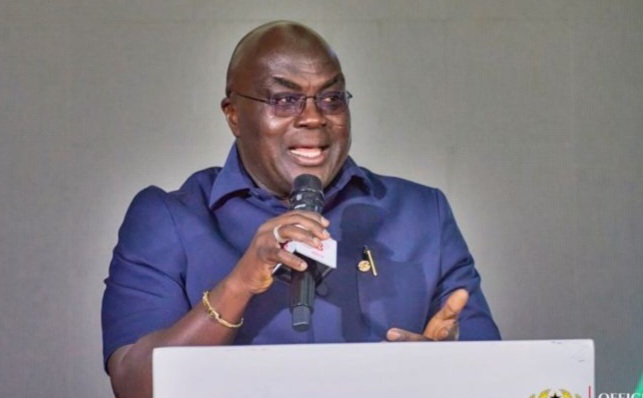
By Innocent Samuel Appiah
In every nation’s political journey, there comes a moment when leaders must move beyond slogans and confront the everyday realities of citizens. The citizens’ engagement speech delivered in the Eastern Region over the weekend by Dr. Samuel Julius Debrah, Chief of Staff to the President, arrived as more than a ceremonial welcome. It was a carefully framed message of humility, accountability, and an insistence on “delivery,” meant to speak directly to Ghanaians who are tired of empty promises and anxious about the future.
Through his address, Dr. Debrah presented the government’s “Resetting Ghana” agenda not as an abstract vision, but as a practical commitment that should be judged by results, not rhetoric. His central argument was clear: leadership is tested not by how well leaders speak, but by how faithfully they listen, respond, coordinate, and produce measurable outcomes for ordinary people.
A Personal Welcome with National Meaning
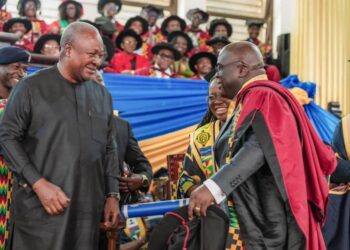
Dr. Debrah began by welcoming His Excellency John Dramani Mahama to the Eastern Region, emphasizing that the moment held deep personal significance. As someone born and raised in the region, he positioned himself not only as a senior government official but also as a fellow citizen who is part of the same national community that the government claims to serve.
This rhetorical choice matters. It establishes credibility and signals that the speech is not coming from a distance. When leaders speak from within their communities, citizens are more likely to feel understood rather than managed. By connecting his identity to the region, Dr. Debrah subtly reminded the public that governance is not merely institutional but it is human, local, and accountable to familiar faces and shared histories.
But the speech quickly shifted from personal privilege to civic responsibility. The Chief of Staff described himself as serving on a “governing team committed to restoring confidence, competence, and hope in public leadership.” Those three words—confidence, competence, and hope, function as the backbone of his message. Confidence speaks to belief in institutions; competence speaks to capability and performance; hope speaks to the emotional and practical belief that the future can improve.
Leadership Must Be Visible, Accountable, and Connected
A major theme in the address was the kind of leadership the administration claims to represent. Dr. Debrah insisted that the President believes leadership must be: Visible – present where people are affected; Accountable – answerable to the public; and Connected – grounded in the day-to-day realities of Ghanaians.
This is more than a motivational statement. It is a standard being set. Dr. Debrah suggested that citizens should expect a form of governance where leaders do not disappear into offices, where promises are not made for political gain alone, and where policies are measured by whether they improve lives.
That connection to everyday realities is particularly important because it directly challenges a common public perception: that politics can become separated from lived experience. By framing engagement as a bridge between government and citizens, Dr. Debrah implied that the administration understands the frustration of people who feel unheard.
Citizens Engagement as a Government That Listens
The Chief of Staff described the citizens’ engagement as an opportunity for the public to speak directly by raising concerns, asking questions, offering ideas, and participating meaningfully in shaping national direction. In doing so, he positioned the event as a two-way process rather than a one-directional lecture.
The phrase “listening is leadership” carries weight here. It suggests that listening is not passive. It is an active duty of government officials. The speech reinforces the idea that citizens are not merely spectators of governance but are partners whose feedback should influence how leadership operates.
This is especially relevant to citizens in regions that have historically felt neglected or promised improvements without witnessing sustained progress. By framing the President’s presence as both speaking and hearing, Dr. Debrah offered a message that the Eastern Region, and by extension the entire country, matters in the decision-making process.
No Excuses: Elected to Solve Problems
One of the most forceful elements of the address was Dr. Debrah’s insistence that the administration will not hide behind excuses. He emphasized that citizens should not expect avoidance of difficult problems, and that leaders were elected to solve issues, not evade them.
This message addresses a deep national concern. Many Ghanaians across different communities have experienced government failures—slow service delivery, economic strain, and uneven trust in public institutions. In such a context, public tolerance for “temporary setbacks” or circular explanations declines. People want solutions that hold up under pressure, not responses that dissolve after public attention fades.
By saying clearly that leadership means confronting hard issues “directly,” Dr. Debrah attempted to preempt cynicism. He effectively argued: if citizens raise challenges today, the government has no intention of treating those questions as mere political theatre. The administration intends to engage, respond, and follow through.
The Presidential Delivery Unit: Turning Promises into Results
Perhaps the most practical section of the speech was the Chief of Staff’s explanation of the “Presidential Delivery Unit,” which he chairs on behalf of the President. He described it as a mechanism designed to ensure that government commitments translate into measurable results for ordinary Ghanaians. He said the delivery unit will strengthen: coordination across government, tracking of implementation, monitoring of performance, and focusing on delivery by ministries and agencies.
This is the point where the speech becomes operational. Rather than relying only on moral language (“we must be accountable”), Dr. Debrah offered an institutional response: a structure intended to reduce waste, improve follow-through, and create a chain of responsibility from the President’s mandate down to ministries and frontline delivery.
In practical terms, the message is that the government is trying to close the gap between policy and outcomes. Many Ghanaians know how easy it is to announce programmes, and how difficult it can be to complete them. The delivery unit represents an attempt to make completion and impact part of governance itself.
Dr. Julius Debrah further stated that he is personally invested in the success of the effort—reinforcing the theme that accountability is not delegated away. He is not merely endorsing the idea from a distance; he claims commitment to ensuring delivery actually happens.
Importantly, he also warned that citizens are interested in outcomes, not explanations. That sentence is both a pledge and a warning: if progress is not visible, the public should judge the administration, and the government should prepare to adjust and improve.
A Reset Rooted in Humility and Faith
Finally, Dr. Debrah framed the national reset not as a battlefield of blame, but as a path guided by humility, determination, and faith in Ghana’s potential and in the people themselves. These ending matters because it tempers the message of firmness with a tone of sincerity.
Humility suggests that the administration recognizes failure is possible—even when leadership intends good. Determination suggests it will not collapse under criticism. Faith in Ghana and Ghanaians suggests that despite the challenges, there is still confidence that progress is achievable.
What the Address Ultimately Means for the Public
For the Ghanaian public, especially citizens who feel disillusioned, the message of the speech can be understood in three connected layers: You will be heard – The engagement is a deliberate public listening process, not a staged performance; You should expect follow-through. The delivery unit is presented as the engine meant to ensure promises become results; and You should hold leaders accountable – Excuses are discouraged; outcomes are emphasized; leadership is judged by delivery.
In short, Dr. Julius Debrah’s address speaks to a country yearning for competence and trust. It reassures citizens that leadership visibility, institutional coordination, and measurable results are central to “Resetting Ghana.” More than welcoming the President, his speech is a commitment—one that tells the nation: the reset is not just about changing direction; it is about changing how governance works.
And if citizens keep demanding outcomes as the Chief of Staff insists, then the success of the message will not be measured by applause at meetings, but by improved services, stronger institutions, and visible progress across Ghana.