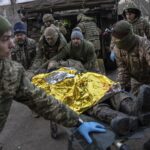


The Sahel region continues to experience protracted instability characterised by violent extremism, political fragility and humanitarian crises. The deteriorating security situation in Burkina Faso, Mali and Niger presents far-reaching implications for coastal West African states, particularly Ghana.
Given Ghana’s geographical proximity and socio-economic linkages with Sahelian states, Ghana faces real and imminent spillover threats including irregular migration, radicalization of vulnerable youth, arms trafficking and transnational organized crime.
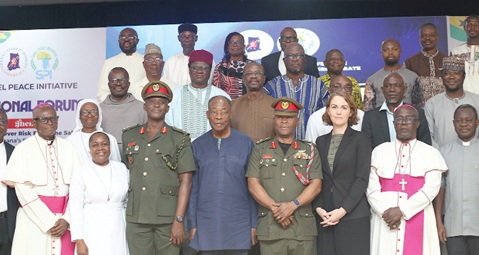
Against this background, the Ghana Catholic Bishops’ Conference (GCBC), through its Governance, Justice and Peace Directorate (GJPD) under the framework of the Sahel Peace Initiative (SPI) has called for an all hands-on-deck approach in containing the spill over risks from the Sahelan states.
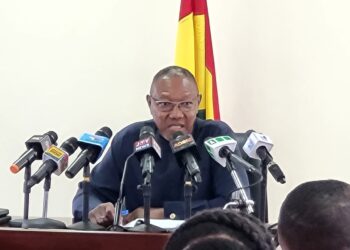
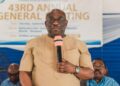
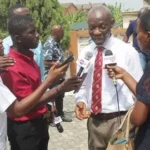
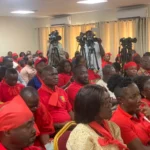
The call was made in Accra during a two Day National Round Table Debriefing and Forum on Spill-Over Risks From the Sahel organized by the GCBC- GJPD
The Director of GJPD, Rev. Father Michael Quaicoe re-affirmed the Catholic Church’s commitment towards ensuring peace in the Sahel.
He reiterated that given Ghana’s proximity to the Sahel, there was therefore the need to explore collaborative approaches involving state and non-state actors to mitigate spillover risks from the Sahel, hence the Forum.
He emphasized that “the Church believes in Ubuntu we are because you are” to signify oneness and unity of purpose in respect of the Sahel.
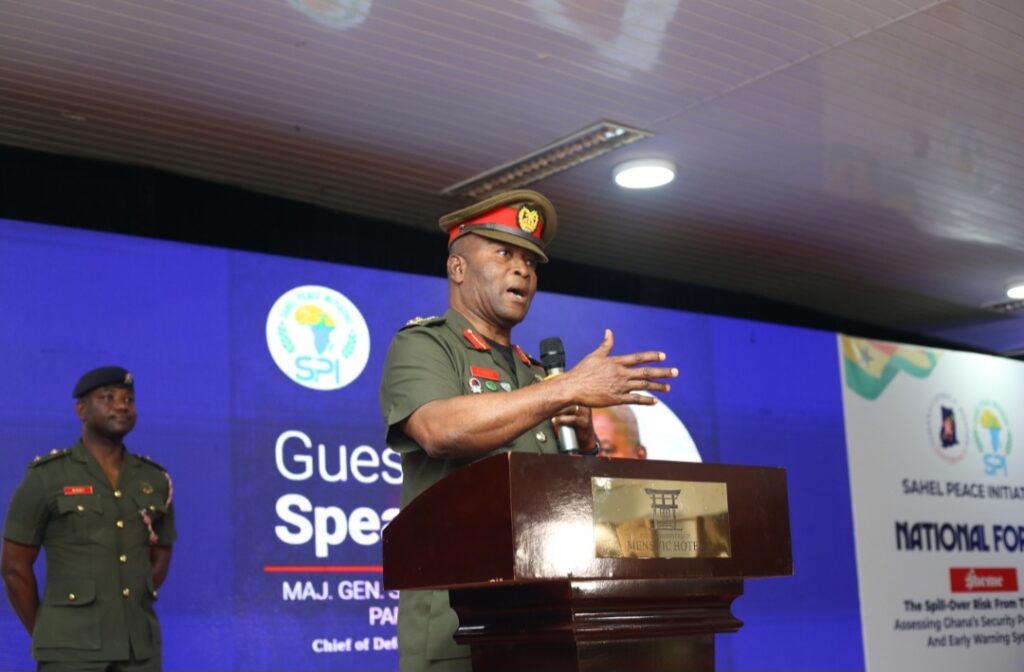
Delivering the Key note address under theme “The Spill-Over Risk from the Sahel: Assessing Ghana’s Security Preparedness and Early Warning System”, the Director of National Counter Terrorism Fusion Centre, Major General Timothy Ba-Taa-Banah, disclosed that more than 8,000 people have been killed in over 2,000 terrorist attacks across the Sahel this year.
The figures represent a 14 per cent increase in fatalities compared with the same period last year.
The data means an average of about 45 people lose their lives to terrorism every day within the subregion.
“Between 2015 and 2025, nearly 99,000 people were killed in more than 23,000 terrorist attacks across the Sahel, making West Africa the epicentre of terrorism on the continent,” Major General Ba-Taa-Banah said.
Terrorism in West Africa
Major General Ba-Taa-Banah said terrorism in the sub-region had evolved from isolated attacks into coordinated operations by groups that were increasingly using technology, artificial intelligence and financial networks to expand their activities.
He said the threat had moved beyond attacks on individuals to targeting economies, governance systems, education, healthcare and public confidence in state institutions.
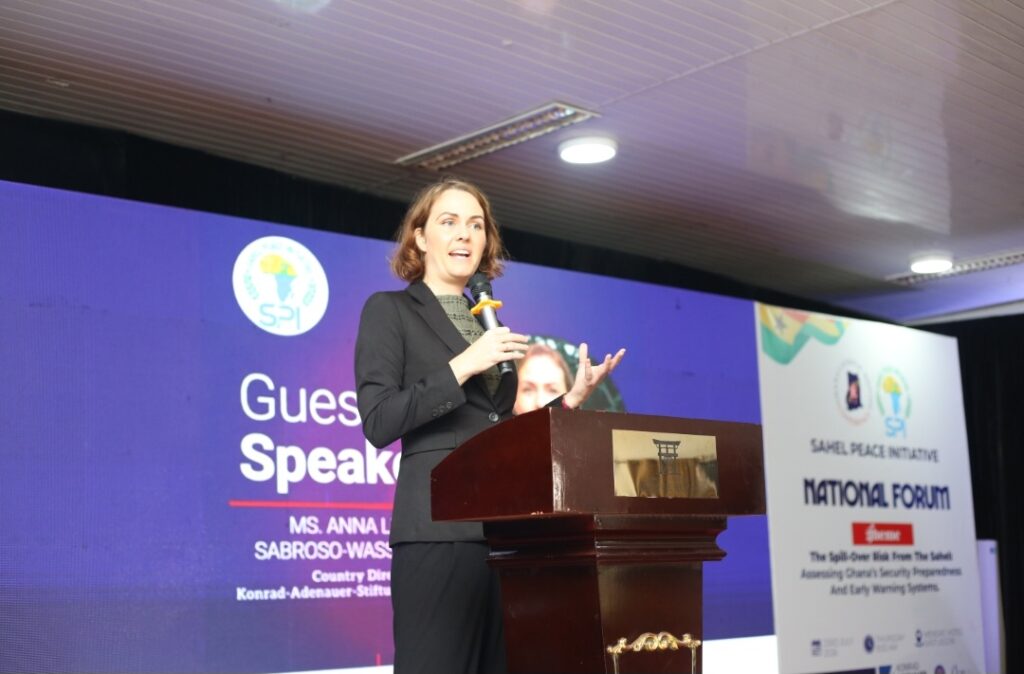
The threat is not just about killing human beings. If it were only human lives, we may not have to worry and invest so much. The nature of the threat requires that we do more than the states are willing to do or the security forces are able to do,” he said.
See something, say something
Major General Ba-Taa-Banah said Ghana had developed a National Counter Terrorism Strategy in 2016, which adopted an all-of-society approach instead of relying only on security and law enforcement agencies.
The National SPI Co-ordinator, Richard Akurugu commended all Participants for their commitment for the 2-day Forum which he described as very useful.
He said the contributions and speeches delivered by Participants would go a long way to draw a road map that details practical steps to follow as a guide to ensuring Ghana’s Security preparedness and strengthen early warning systems.
On the media’s role in ensuring peace in the Sahel, the President of Online Publishers Association of Ghana (OPAG), Michael Petit Mawugbe underscored the need for the media to be responsible and practice what he called peace Journalism rather than sensationalism-that often exacerbate conflict situations.
He cautioned the media particularly the online practitioners to use fact mechanism in conflict sensitive reporting in order to avert tensions.
Mr. Mawugbe later re-affirmed OPAG’s commitment to the SPI and expressed his readiness to collaborate with the SPI and the National Security in raising awareness for the See Something Say Something initiative.
Source:www.senaradioonline.com