


The Director-General of the National Development Planning Commission (NDPC), Dr. Audrey Smock Amoah, has underscored the importance of effective planning and timely reporting by Metropolitan, Municipal and District Assemblies (MMDAs) to strengthen national development coordination in Ghana.

Director-General of the National Development Planning Commission (NDPC), Dr. Audrey Smock Amoah
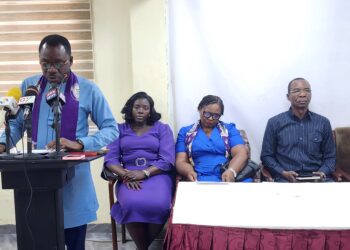
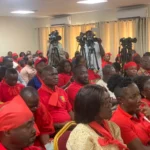
Speaking during a consultative engagement in Wa in the Upper West Region, Dr. Amoah explained that the country’s planning system operates as a chain linking the district, regional and national levels, where each report contributes to the overall monitoring of development progress. “One person’s output becomes the input for the next level,” she noted, adding that delays by districts in submitting reports could disrupt the preparation of the national annual progress report.
Dr. Amoah further emphasised that development planning is essential for institutions just as it is for individuals. Using a simple analogy, she explained that “if a woman goes to the market without a list, she may return with items she did not plan for and even miss something very important.” She therefore urged local authorities to ensure that development plans are properly prepared, implemented and monitored to address the real needs of communities and support national development objectives.
She further outlined the Commission’s constitutional mandate and planning processes, emphasising its role in coordinating national development policies and guiding decentralized planning across Ghana noting that the Commission derives its authority from Articles 86 and 87 of the 1992 Constitution of Ghana and operates under key legislative frameworks including the National Development Planning Commission Act, 1994 (Act 479) and the National Development Planning (System) Act, 1994 (Act 480). “Our main business is to advise the President by studying and analysing the macroeconomic environment and proposing development plans and policy options for the country,” the Director-General explained, adding that the Commission also coordinates the decentralized planning system from the national level through the regional and district assemblies.
The Director-General further explained that the current Medium-Term National Development Policy Framework for 2026–2029 is anchored on the “Resetting Ghana Agenda”, which focuses on creating jobs, ensuring accountability and promoting shared prosperity. The framework is structured around five key dimensions: economic development, social development, environment, infrastructure and spatial development, governance and institutional development, and international relations.
According to the Dr. Amoah, several government priority programmes fall under these dimensions, including the 24-hour economy initiative, accelerated export development, agriculture for economic transformation, and digital job initiatives. On the social front, initiatives such as the Build for All programme, expansion of tertiary student accommodation, the Bright Beginnings early childhood programme and the Ghana Medical Trust Fund have been prioritised to improve the welfare of citizens.
Highlighting the planning and monitoring process, the Director-General noted that the NDPC issues guidelines to Metropolitan, Municipal and District Assemblies to guide the preparation of their development plans, which are then reviewed to ensure compliance with national policies and legal frameworks. Regional Planning Coordinating Units conduct an initial assessment before the plans are submitted to the Commission for detailed evaluation. “When we finish reviewing the plans, we provide comments, and once those comments are adequately addressed, the assembly qualifies for a certificate of approval,” the she said.
The Director-General added that these plans also form the basis for several national assessments, including the District League Table and performance monitoring by institutions such as the Office of the Head of the Local Government Service, emphasising that district plans must reflect the real needs of the communities they serve.
On his part, the Upper West Regional Minister, Hon. Charles Lwanga Puozuing, described the engagement as timely as Ghana works toward harmonising its various long-term development frameworks into a single national blueprint.
He noted that initiatives such as the 40-Year Long-Term National Development Plan, the Ghana Beyond Aid Charter and Ghana@100 contain valuable ideas that must be aligned to guide the country’s development. “This engagement seeks to ensure that these important initiatives are harmonised into a single, coherent national development plan that will provide clarity, continuity and strategic direction for our country,” he said.
source:www.senaradioonline.com