

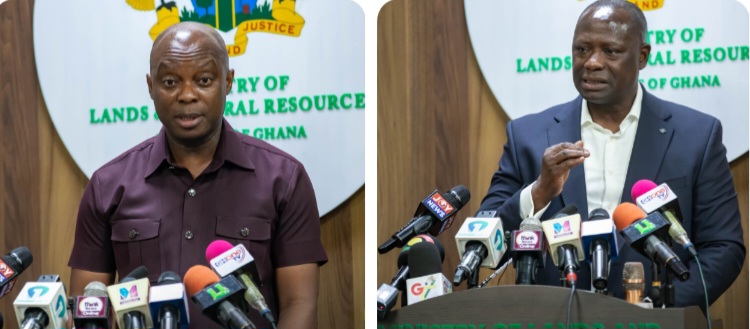
Ghana On 10th November, 2026, became the first country in Africa and the third in the world, after Guyana and Costa Rica, to achieve the issuance of jurisdictional forest carbon credits under the Architecture for REDD+ Transactions (ART) of The REDD+ Environmental Excellence Standard (TREES).
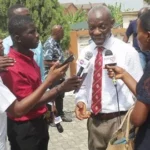
Announcing the historic feat at a news conference in Accra on Monday (November 23, 2026, Minister for Lands and Natural Resources,Hon. Emmanuel Armah Kofi-Buah explained that ART has issued Ghana approximately 6.5 million tonnes of carbon dioxide equivalent in verified emission reductions achieved between 2017 and 2021.
He said this milestone was officially announced to a global audience at COP31 in Antalya, Türkiye, by Ghana’s Ambassador to Türkiye, His Excellency Abdul Nasiru-Deen, on behalf of the Government and people of Ghana.
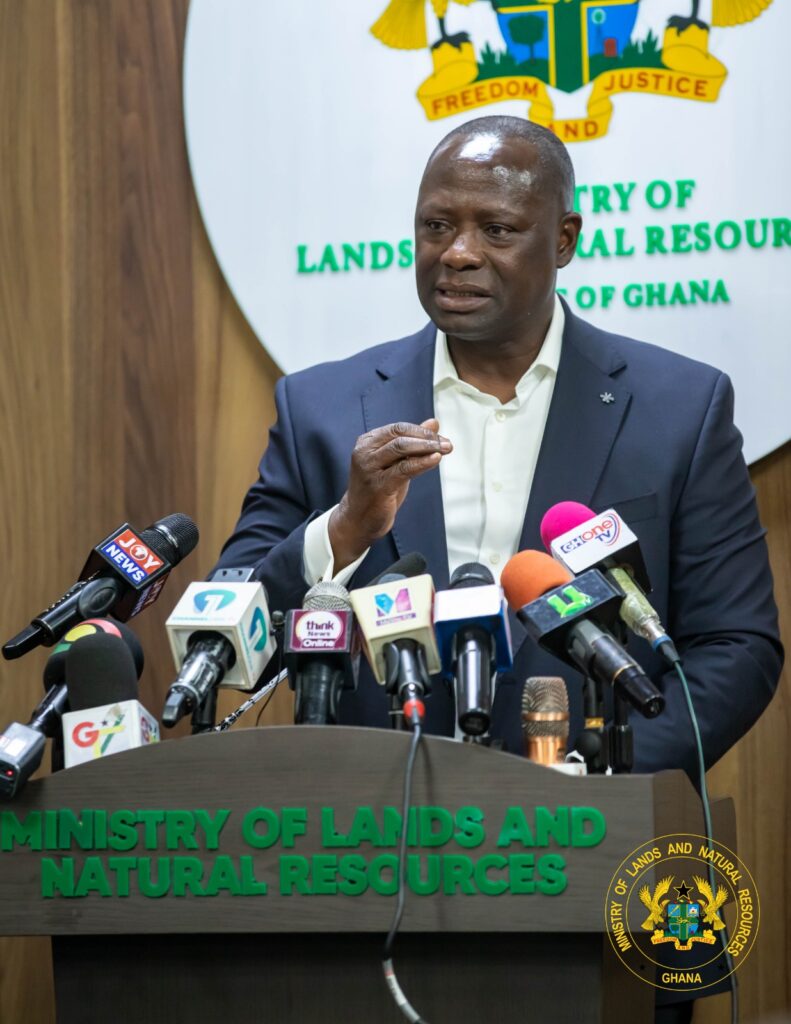
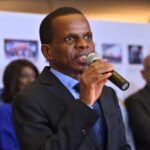
Minister for Lands and Natural Resources,Hon. Emmanuel Armah Kofi-Buah
“Today, as I announce to the general public this historic milestone achievement, I intend to shed light on the journey, significance, and implications of this achievement to Ghana, the continent of Africa, and especially forest-dependent communities”, the Minister stressed.
WHAT GHANA HAS ACHIEVED
Hon. Armah Buah further explained that Forests store carbon, and deforestation and forest degradation release carbon dioxide into the atmosphere adding that Each ART TREES credit represents one tonne of carbon dioxide equivalent (CO₂e) in verified emission reductions through avoided deforestation and forest degradation and forest landscape restoration.
“These credits were not simply allocated to Ghana: they were earned through results that had to be achieved, measured, reported, independently validated, and verified”, he emphasized.
According to the Ellembelle Member of Parliament, ART TREES operate at a jurisdictional rather than project scale adding that Ghana had to account for forest changes across a broad landscape of communities, farms and on and off-reserve forests, comparing emissions against the applicable reference level.
“The Ministry of Lands and Natural Resources provided policy oversight, while the Forestry Commission led the technical process using forest monitoring systems and data” the Minister emphasized.
The Minister however noted that Ghana’s history as the first country in Africa and the third globally to receive jurisdictional forest carbon credits under ART TREES is not the end of the journey stressing that “our responsibility now is to complete the initial transactions, realize the payments, manage benefits transparently, seek appropriate value for the remaining approximately 2.5 million credits, sustain and improve the forest results that made issuance possible”.
He reiterated the urgent need to protect our forests from illegal mining, logging, wildfires and unsustainable agricultural expansion; support livelihoods compatible with conservation; and ensure that those who support in the protection of our forest resources share in the benefits.
“The issuance of approximately 6.5 million ART TREES credits is not the conclusion of Ghana’s journey, but evidence that our efforts are producing results. Let us build on these results, protect the integrity of the Monitoring, Reporting and Verification (MRV) systems developed under the ART TREES, to ensure continued carbon and related benefits for current and future generations”, Hon. Armah Buah appealed.
WHAT THE ISSUANCE MEANS FINANCIALLY
Hon. Armah Buah explained that Out of the approximately 6.5 million credits issued, buyers, including participants through the LEAF Coalition, have committed to purchase 4 million tonnes of carbon credits, valued at approximately USD 43 million at prices ranging from USD 10 to USD 13 per credit. Approximately 2.5 million credits remain available for further transactions, which could likely yield an additional USD 25 million.
He emphasized however that it is important to distinguish credit issuance from receipt of funds maintaining that Ghana has secured the verified credits, but yet to receive the corresponding revenues.
“Government will pursue opportunities that secure appropriate value for Ghana, protect programme integrity, and align with national climate commitments. Climate Financing will provide additional resources to support forest protection, restoration, and sustainable forest management while improving rural livelihoods” the Minister assured.
SUSTAINING THE RESULTS
According to the Minister, this credits reward emission reductions assessment was from 2017 to 2021; the next monitoring period covers 2022 to 2026 adding that further issuance depends on demonstrable emission reductions through avoided deforestation and forest degradation and forest landscape restoration, independent verification, and continued compliance with TREES.
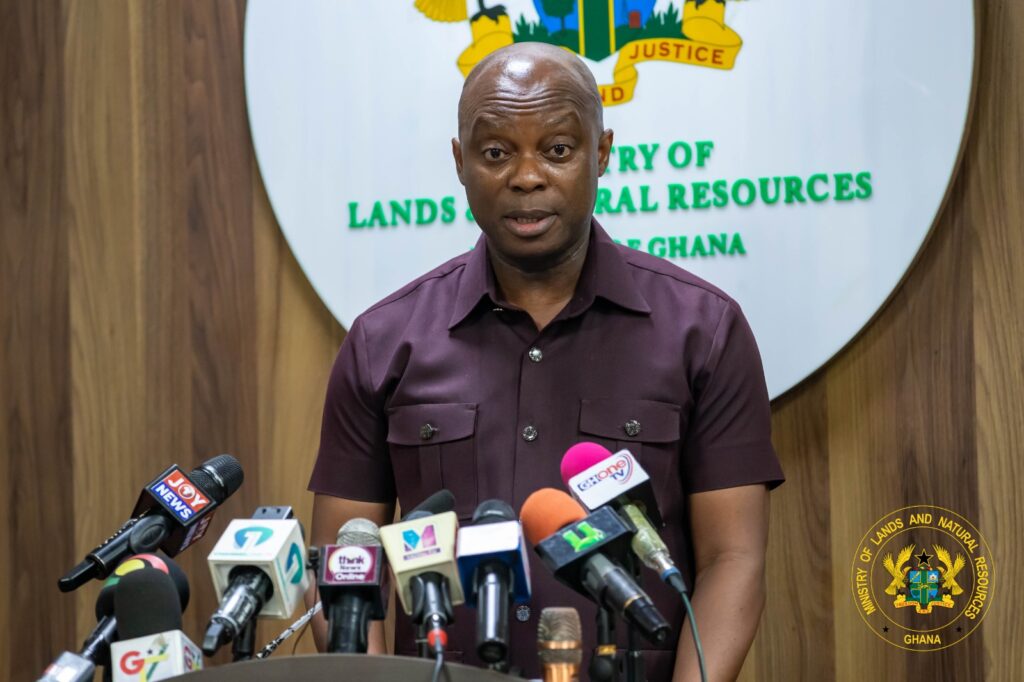
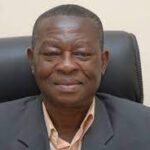
“Chief Executive of Forestry Commission, Dr. Hugh Brown
Illegal mining (galamsey), illegal logging, wildfires and unsustainable agricultural expansion into forest areas continue to threaten forests, water bodies and potential carbon benefits. The Ministry will work closely with the Forestry Commission, district assemblies, traditional authorities, communities and other institutions to strengthen forest protection and restoration and law enforcement, community sensitization and education and provision of alternative sustainable livelihoods.
As the harmattan season approaches, I urge farmers, communities, traditional leaders, district authorities, Ghana National Fire Service and Forestry Commission staff to prevent wildfires and respond quickly when they occur”, he advised.
He later commended the CEO of the Forestry Commission, Dr. Hugh Brown and his team and the Partners for this historic feat.
“I pay special tribute to the current and previous leadership of the Forestry Commission and its Forest Services and Wildlife Divisions. We salute the Forest Guards, Wildlife Resource Guards, the Rapid Response Unit, Regional, District and Park Managers, technical officers and other field staff, for their dedicated service in the protection, development and management of the nation’s forest and wildlife resources, sometimes at the peril of their lives. Today, we honour those who have lost their lives in active service in pursuit of protecting and conserving our forest and wildlife heritage”, he emphasized.
For his part, the Chief Executive of Forestry Commission, Dr. Hugh Brown disclosed that under the ART TREES Credits, Ghana is to receive approximately $68million from 6.5 million tonnes of emission reductions.
He added that 43$million has already been committed for 4 million tonnes with the funds expected to hit Ghana’s account in January adding that the remaining 2.5 million tonnes is expected to generate an additional $25million
NEARLY TWO DECADES OF WORK AND PARTNERSHIP
Giving the history behind the feat, Dr. Brown revealed that Ghana began its REDD+ journey in 2008 stressing that Successive governments have invested in forest protection and monitoring, forest restoration, social and environmental safeguards, benefit-sharing arrangements and implementation, building the institutional and technical capacity needed for credible forest carbon accounting.
“ART approved Ghana’s TREES Concept in 2021. In January 2024, Ghana’s TREES Registration Document and Monitoring Report for 2017–2021 was accepted by ART.
AENOR CONFIA S.A. was appointed as the independent third-party verifier in May 2024. They assessed the forest data, carbon accounting, reported results, and safeguards compliance”, he revealed.
According to him, following a series of technical consultations, clarifications, and corrections that spanned a period of about two years, AENOR finally cleared Ghana’s submission and forwarded the reviewed documents to the ART Secretariat in September, 2026.
He added that the ART Board subsequently approved issuance on 10 November 2026.
The Forestry Commission boss later paid tribute to the Food and Agriculture Organization of the United Nations (FAO), the United Nations Development Programme (UNDP), and the United Nations Environment Programme (UNEP), including support through the UN-REDD partnership for support in achieving this historic feat.
WHAT THIS MEANS FOR FARMERS AND COMMUNITIES
He disclosed that Farmers, forest-fringe communities and traditional authorities contributed directly to this achievement and have a legitimate interest in how the benefits are shared.
Dr. Brown later disclosed that Under the ART TREES transactions, the approved benefit sharing, which was developed through a multi-stakeholder consultative process, is as follows:
- Communities (including traditional authorities and farmers) = 46%
- Government (including FC, MMDAs, COCOBOD, GNFS) = 39%
- NGOs = 2%
- Private Sector = 3%
- Project Management Unit (fixed cost) = 10%.
He said it is expected that, with these benefits, rural communities will be incentivized to support forest conservation efforts, while providing additional resources to Government for forest protection and forest landscape restoration interventions.
source:www.senaradioonline.com