

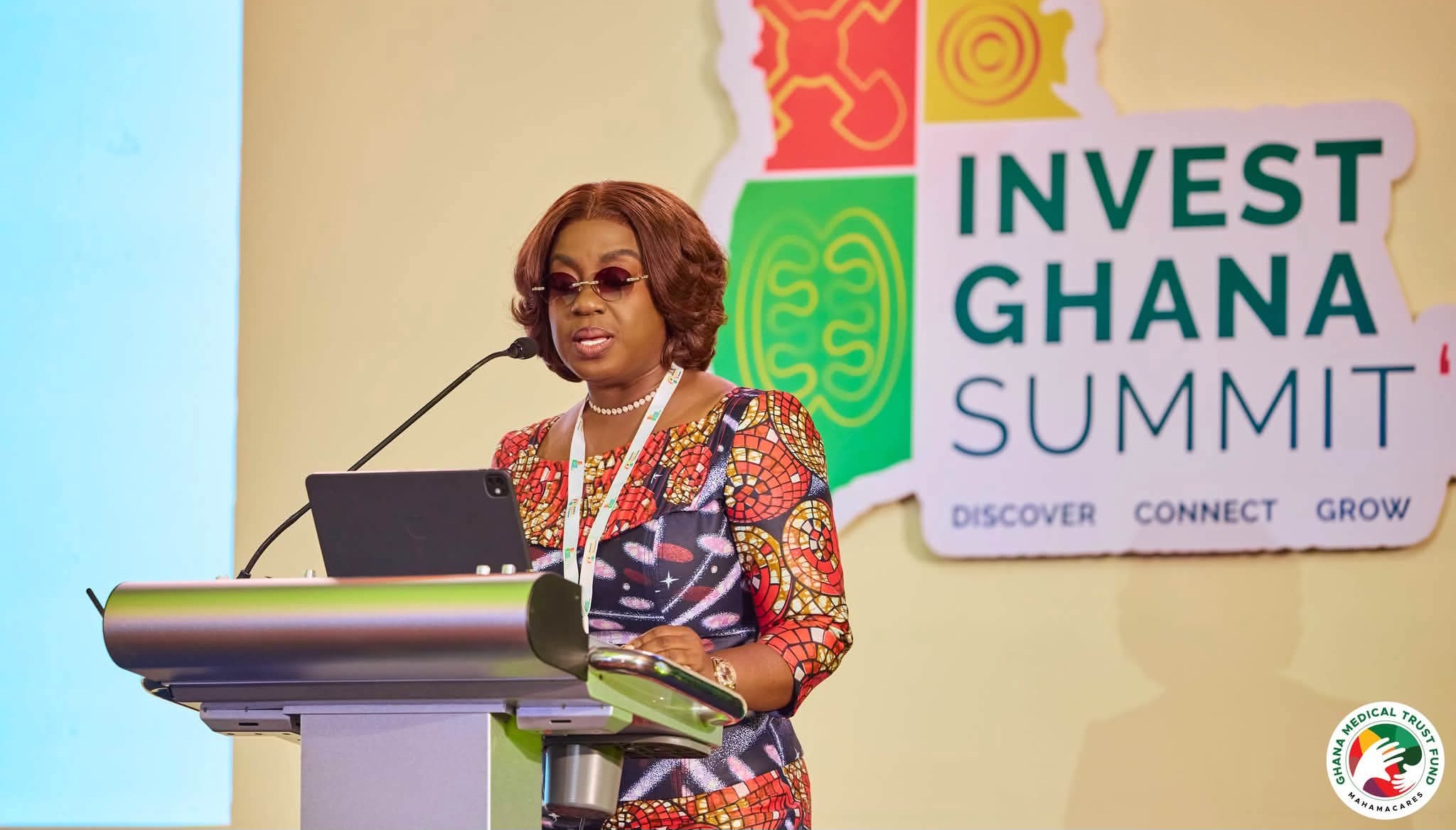
Administrator of Ghana Medical Trust Fund (GMTF) Adjoa Obuobia Darko-Opoku has called on private sector to invest in specialist healthcare infrastructure, medical technology and life-saving treatment.
The mother of a sick child sitting outside a hospital consulting room, anxiously waiting to hear whether her child can be treated, may have little interest in investment figures, corporate profits or economic growth.
Her immediate concern is painfully simple: where will her child receive the treatment needed to survive, and how will she pay for it?
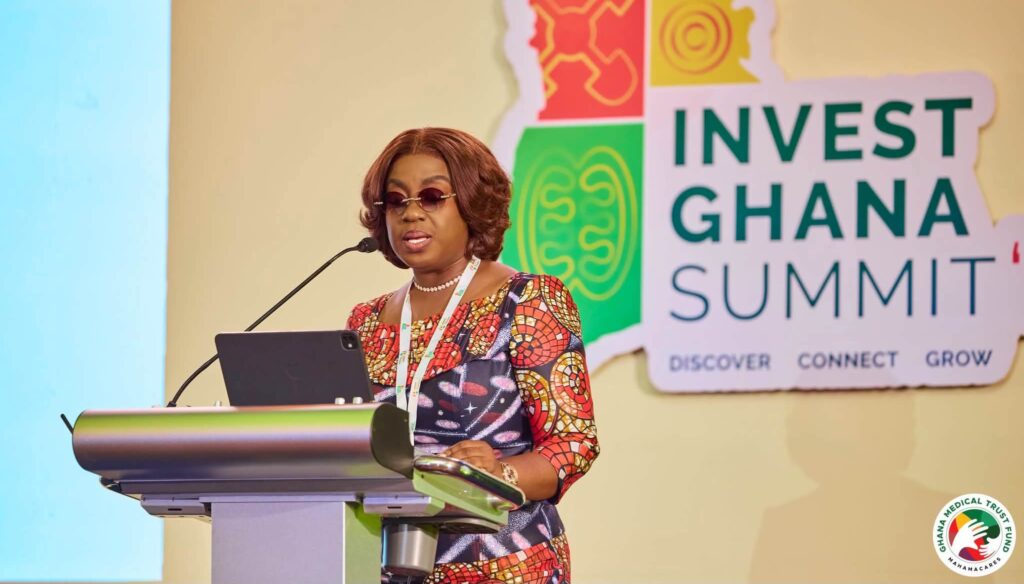
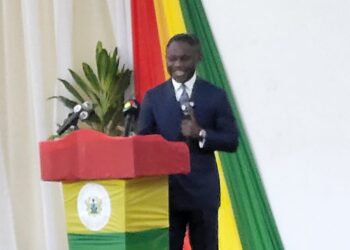
Administrator of Ghana Medical Trust Fund (GMTF) Adjoa Obuobia Darko-Opoku
It was this deeply human reality that the Administrator brought before an international gathering of investors and business leaders at the Invest Ghana Summit 2026, challenging the private sector to recognise healthcare as one of the most important investments in the country’s economic future.
In an emotionally compelling address, she asked participants to imagine a situation in which someone they loved urgently needed specialist medical attention.
“If someone you love needed urgent specialist care tonight, which hospital would you take them to? And how sure are you that the hospital can handle the treatment when you arrive?” she asked.
The question, which became the defining message of her address, set the tone for a passionate appeal for stronger public-private partnerships to expand access to specialised healthcare and ensure that financial difficulties do not condemn vulnerable patients to avoidable suffering or death.
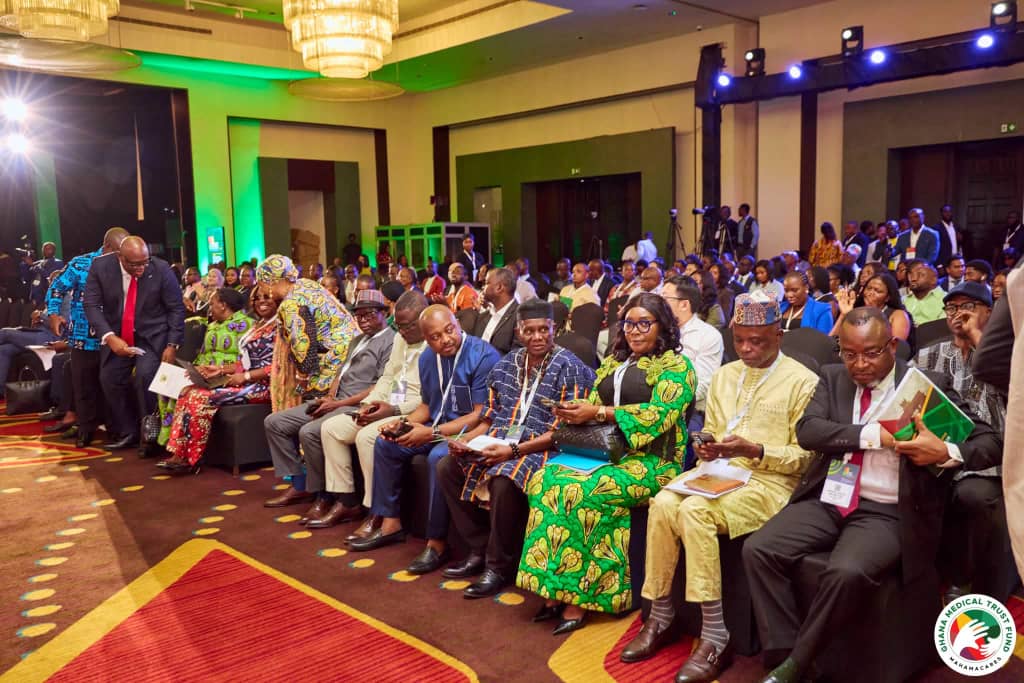
Addressing the gathering, which brought together investors, captains of industry, development partners and other stakeholders, Ms Darko-Opoku argued that the strength of an economy ultimately rests on the health and wellbeing of its people.
She observed that when illness forces families to exhaust their savings, parents to abandon their livelihoods or businesses to lose productive employees, the consequences extend beyond individual households to affect national productivity and economic development.
“Every sector represented in this room depends on healthy people. Every one of us has a stake in whether our hospitals can care for them,” she stressed.
She therefore called on investors to look beyond conventional business opportunities and consider healthcare infrastructure, specialist medical services, research, technology and patient treatment as strategic areas for investment.
GMTF turning investment into life-saving interventions
Ms Darko-Opoku highlighted the Ghana Medical Trust Fund, established in 2025 under the leadership of President John Dramani Mahama, as a major national intervention aimed at reducing the financial burden of specialised treatment for people living with chronic and non-communicable diseases.
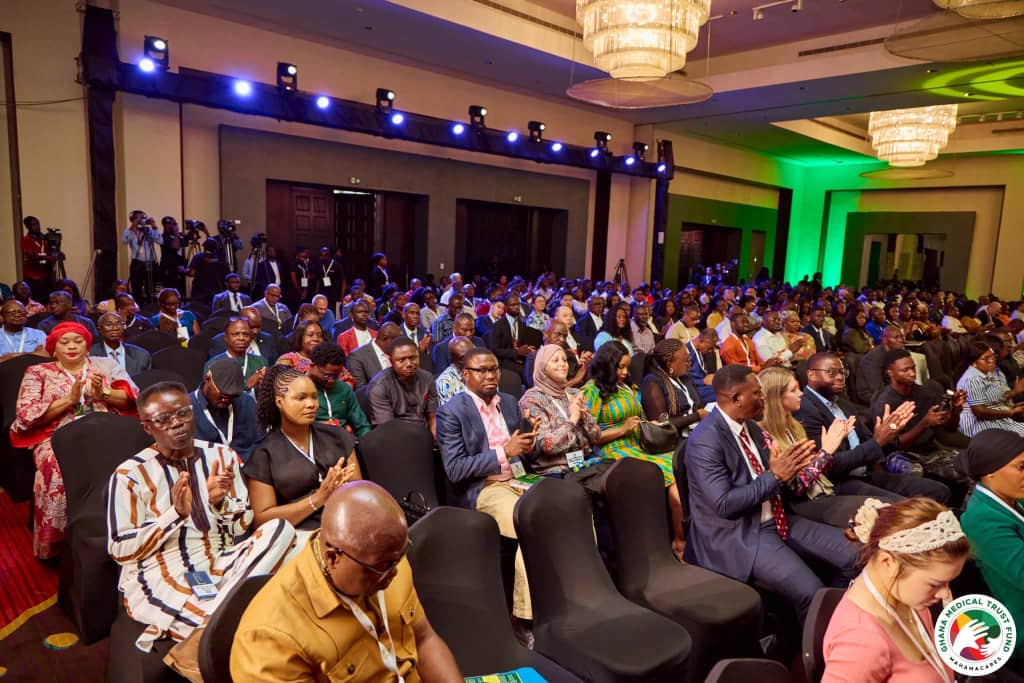
She explained that following its establishment, the Fund embarked on needs assessments across teaching, regional and referral hospitals to identify critical gaps in healthcare delivery, equipment, infrastructure and patients’ access to specialised services.
The engagements with medical professionals and hospital administrators helped shape the Fund’s intervention priorities and identify areas where strategic investment could produce the greatest impact.
One of the significant outcomes, she noted, was the inauguration and operationalisation of a new Cardiac Catheterisation Laboratory at the National Cardiothoracic Centre of the Korle Bu Teaching Hospital, following the destruction of the previous facility by fire.
The intervention has strengthened the Centre’s capacity to provide critical cardiac services and undertake life-saving procedures.
Beyond infrastructure, the Fund has supported more than 200 patients at the National Cardiothoracic Centre, including approximately 150 children, through financial assistance for surgeries, treatment and medical bills.
For the Administrator, these figures represent far more than statistics.
They represent children whose futures have been given another chance, parents spared the anguish of losing their loved ones and families given renewed hope at moments when the cost of specialised healthcare threatened to overwhelm them.
She also acknowledged President Mahama’s support for the ongoing development of new Cardiac Catheterisation Laboratories at the Tamale Teaching Hospital and Komfo Anokye Teaching Hospital in Kumasi, interventions expected to strengthen access to specialised cardiac services beyond Accra.
$10 million KGL commitment demonstrates private-sector potential
Making a compelling case for corporate participation, Ms Darko-Opoku cited the $10 million commitment by the KGL Group towards the construction of a Diagnostic and Imaging Centre at the Greater Accra Regional Hospital, popularly known as Ridge Hospital.
She explained that the commitment followed an appeal by the Fund after engagements with the hospital revealed significant gaps in diagnostic and imaging equipment, despite the facility attending to approximately 800 patients daily.
The project, she said, demonstrates what can be achieved when the private sector responds to clearly identified healthcare needs through strategic partnerships.
She drew attention to the human implications of improved diagnostic services, particularly for women who discover suspicious lumps and must endure uncertainty while waiting for tests and medical answers.
For such patients, access to timely diagnosis can make the difference between early intervention and delayed treatment.
The Administrator urged other corporate institutions to emulate the KGL Group by identifying critical healthcare needs in communities where they operate and working with the Fund to address them.
Call for investment in oncology and nuclear medicine centres
Looking ahead, Ms Darko-Opoku invited private-sector investors, international healthcare institutions, medical technology companies, foundations and development finance partners to collaborate with the GMTF on proposed Oncology and Nuclear Medicine Centres across the country.
The proposed facilities are expected to integrate advanced diagnostic imaging, including PET-CT, nuclear medicine, radiotherapy and chemotherapy services.
She emphasised that bringing these services together would help address gaps in cancer diagnosis and treatment while reducing the burden on patients and their families, who often have to navigate different facilities in search of specialised care.
She called for partnerships that would go beyond the provision of equipment to include infrastructure financing, specialist training, technology transfer, maintenance systems and sustainable service delivery.
“If you finance health infrastructure, operate specialist facilities or supply medical technology, come and sit with us,” she appealed.
“Let us discuss how the centre can be financed, how Ghanaian teams can be trained, how the equipment will be maintained and how we can keep those services within reach of patients.”
Her appeal extended to companies operating across the country’s regions, urging them to consider the hospitals serving their employees, their families and surrounding communities as potential areas for meaningful corporate investment.
Tax incentives offer additional motivation for corporate giving
The GMTF Administrator also drew attention to the investment incentive available to corporate donors under Section 22(2) of the Ghana Medical Trust Fund Act.
The provision allows companies to claim an income tax deduction equivalent to qualifying donations made directly to the Fund, in accordance with the Income Tax Act.
She encouraged corporate finance teams to factor the incentive into their philanthropic and corporate social responsibility decisions, particularly when considering contributions towards hospital equipment, specialist treatment and healthcare infrastructure.
She further appealed to banks, development finance institutions, international foundations, philanthropists and Ghanaians in the diaspora to support the Fund through financing, equipment, specialist training and direct patient assistance.
According to her, even support that enables one patient to commence treatment can make an immeasurable difference to a family.
Beyond investment figures: a question of human dignity
In a particularly moving conclusion, Ms Darko-Opoku returned to the mother waiting outside the consulting room, whose fears and uncertainty had framed her address from the beginning.
She challenged investors to imagine a Ghana where a parent whose child requires a complex medical procedure does not have to face the additional trauma of searching desperately for a hospital capable of performing it.
She envisioned a healthcare system where more patients can receive specialised treatment within the country, closer to their families, without the financial burden becoming an insurmountable barrier.
“Let us build a Ghana where more families know the answer. Where a mother can hear that her child needs a procedure and, in the very same conversation, hear the doctor say, ‘Yes, we can do it here,’” she said.
She urged participants to move beyond expressions of goodwill and translate their interest into concrete commitments by engaging the GMTF team, identifying areas of support and agreeing on projects for further consideration.
According to her, healthcare investment must not be viewed merely as charity or corporate benevolence, but as a fundamental contribution to national development, economic resilience and the preservation of human life.
For the mother waiting anxiously outside that consulting room, the most valuable investment may ultimately be the one that allows her to hear four simple but life-changing words from a doctor:
“We can treat you here.”