

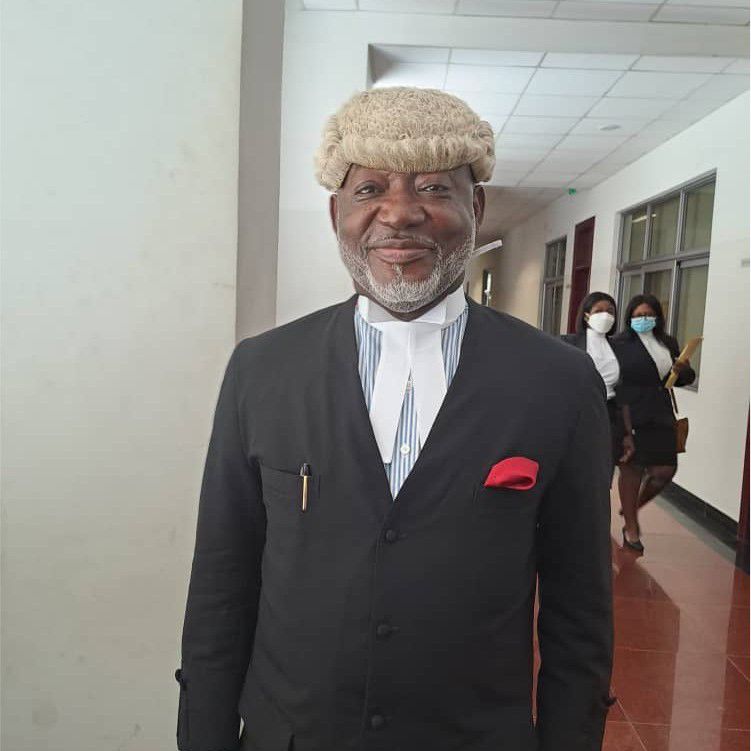
By; Charles Owusu Juanah Esq. – Counsel for the National Cathedral Secretariat
The recent public comments by Osagyefo Oseadeeyo Dr. Nana Freduah Agyemang Badu II, the Dormaahene and President of the Bono Regional House of Chiefs, regarding the National Cathedral project must be addressed with the solemn responsibility that truth and public interest demand. While we recognize and respect his esteemed traditional status and his judicial role, such influence carries a corresponding duty to engage on matters of national significance only where informed by fact, not conjecture.
Charles Owusu Juanah Esq. – Counsel for the National Cathedral Secretariat
I. FACTS MUST GUIDE PUBLIC DISCOURSE – NOT SPECULATION
In his remarks, the Dormaahene urged President Mahama to “ensure accountability and possible prosecution over alleged corruption” in the National Cathedral project, citing figures ranging from USD $56 million to “96 or 97 million dollars” and expressing personal uncertainty about the details of the project. 
With all due respect, it is irresponsible for any leader; traditional, judicial, or otherwise; to give currency to claims of corruption without verified evidence. The National Cathedral is a proposed interdenominational Christian cathedral, initiated as a national project for unity and spiritual identity, and it has been subject to public scrutiny, debate, and formal audit processes. 
Notably:
• A statutory audit by Deloitte Ghana (covering 2021–2023); the very audit that Dormaahene’s remarks implicitly reference; did not conclude misappropriation, theft, or corruption. Rather, it identified areas where record-keeping could be improved, which is standard for large, complex projects and not evidence of criminal conduct. 
• All state funds received and disbursed have been accounted for under approved contracts and in line with project work delivered. 
• The audit further confirms that funds allocated have produced tangible progress; including completed design work by internationally respected architects, concept planning for Africa’s first Bible Museum, and preparatory construction works. 
To insinuate impropriety absent verified findings from competent authorities is to erode public confidence in due process and to mislead an already anxious citizenry.
II. TRANSPARENCY AND LAW ARE NOT MUTUALLY EXCLUSIVE
Contrary to the narrative that the National Cathedral’s financial structure is opaque or secretive; which several commentators have repeated; the project has been voluntarily transparent to Parliament and oversight institutions:
• The National Cathedral Secretariat provided all relevant documentation to Parliament in December 2022 to invite legislative oversight or independent audit. 
• The project’s financing arrangements, including seed funding by the state and voluntary contributions, have been openly articulated in annual budget statements and are publicly accessible. 
• The Attorney-General’s Department including Dominic Akuritinga Ayine : the current Attorney has consistently maintained that the payments linked to the project are lawful and constitutionally compliant. 
Truthful engagement with these facts is not a matter of political expediency; it is a constitutional imperative.
III. NATIONAL DEBATE SHOULD NOT DESCEND INTO MISINFORMATION
National discourse thrives on informed critique, not exaggeration. Traditional and judicial leaders are pillars in Ghanaian society precisely because they uphold reasoned judgment, deference to verified data, and respect for institutional processes.
The Dormaahene’s appeal for investigation, couched in assertions that the project constitutes corruption without referencing actual findings of unlawful conduct, inadvertently fuels misinformation. This is particularly unfortunate given:
• The project’s rich heritage and national symbolism as an interdenominational place of worship, cultural tourism, and civic identity. 
• The fact that comparative landmark public religious edifices worldwide routinely undergo scrutiny, rigorous auditing, and public debate without presumption of malfeasance.
Public discourse on infrastructure; especially one intertwined with national identity and faith; deserves precision, not platitude; facts, not hearsay; and adjudication by competent authorities, not uninformed conjecture.
IV. A CALL FOR FACT-BASED ENGAGEMENT
We welcome robust debate on the National Cathedral project. We encourage every citizen; including traditional leaders and judicial office holders to:
1. Rely on verified institutional reports before asserting claims of wrongdoing.
2. Appreciate the difference between calls for transparency and accountability and unsubstantiated allegations of corruption.
3. Support Ghana’s democratic fabric by advancing discourse that strengthens faith in our institutions rather than diminishing it.
Guarding the Sacred from Partisan Intrusion
It is deeply regrettable that the National Cathedral; conceived as a unifying spiritual and national monument; continues to be dragged into the arena of partisan politics. Persistent politicization distorts public understanding, undermines objective assessment, and reduces a national faith-based project to a tool for political point-scoring. More concerning is when such politicization is advanced by individuals whose constitutional and customary positions demand neutrality, restraint, and sober reflection. As a revered traditional ruler and a serving judge, the Dormaahene occupies offices that are, by their very nature, insulated from political contestation. Public commentary that mirrors political rhetoric, rather than judicial circumspection and traditional wisdom, risks blurring the critical lines between law, chieftaincy, and partisan politics. It is therefore respectfully advised that the Dormaahene refrains from political engagements on this matter and allows constitutionally mandated institutions to perform their roles without undue external pressure. The preservation of the dignity of the judiciary and the sanctity of the chieftaincy institution is far more enduring than any transient political debate.
CONCLUSION
The Dormaahene’s influence on national consciousness is significant, and with such stature comes an elevated responsibility to speak with precision, restraint, and fidelity to verified facts. The National Cathedral project, like every complex national undertaking, must remain subject to lawful oversight and accountability; but such oversight must be exercised strictly through constitutional processes, established audit mechanisms, and competent state institutions, not through conjecture or politically tinted commentary.
Equally important is the need to preserve the National Cathedral from persistent politicization, which only serves to distort its original purpose as a unifying spiritual and national symbol. When public discourse on the project drifts into partisan territory; particularly when driven by figures whose offices demand neutrality; it risks undermining both institutional credibility and public trust. Traditional and judicial authority must remain anchored in wisdom, objectivity, and constitutional restraint, not political contestation.
Let us therefore anchor our national debates in truth, respect for due process, and institutional discipline. Only then can we build not merely edifices of stone and steel, but a Ghana that stands firmly on integrity, justice, and the enduring dignity of its democratic, judicial, and traditional institutions.
Charles Owusu Juanah Esq. : Counsel for the National Cathedral Secretariat