

By Jamila Wahab
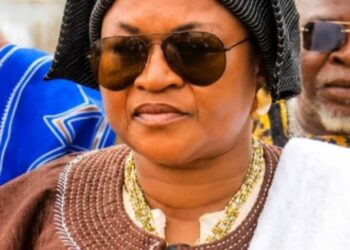
The extended disregard for a vital culvert bridge at Adedease-Asougya in the Sunyani East Municipality of the Bono region in Ghana has once again subjected the New Patriotic Party (NPP) to intense scrutiny, following the intervention of the Nkorsohene (Development Chief) of the Nankwtewa Traditional Area, Mustapha Meshark.
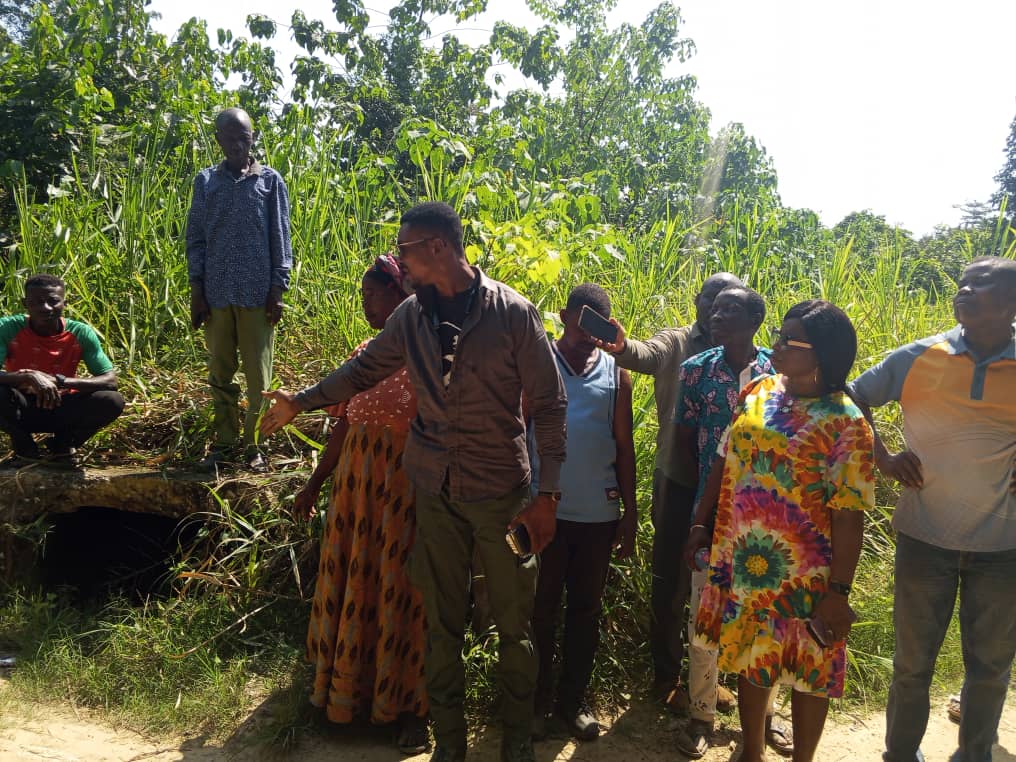
The culvert, which has been left incomplete and abandoned for almost 16 years, has been cited as a contributing factor to ongoing flooding in the community and the decline of road connectivity in the region.
Residents assert that successive NPP Members of Parliament have neglected to prioritize this project, despite numerous appeals and the evident risks it poses to both lives and property.
It is noteworthy that one of the culverts was initiated during the tenure of the late J.H. Mensah, who served as the Member of Parliament for the Sunyani East constituency around 2001.
However, the project was never finalized and has since fallen into disrepair, representing what critics label as the NPP’s enduring neglect of essential infrastructure in the region.
Consequently, the original road connecting Adedease-Asougya has become impassable, compelling residents to depend on an alternative route that is deemed unsafe and unreliable, particularly during the rainy season.
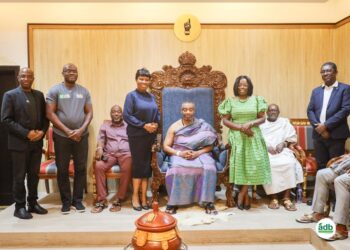
In a development that has further politicized the matter, Nkorsohene Mustapha Meshark has intervened to galvanize efforts to resolve the issue, a responsibility that many residents believe should have been undertaken by government officials long ago.
His involvement has rekindled discussions regarding the NPP’s development performance in the Sunyani East constituency and has raised broader concerns about accountability and dedication to rural infrastructure development.
The neglected culvert, which local residents claim has led to ongoing flooding and deteriorating road conditions, was initiated during the term of former Sunyani East Member of Parliament, J.H. Mensah, around 2001 under the New Patriotic Party (NPP) administration but was never finalized.
The inability to complete the project resulted in the abandonment of the original road, forcing residents to depend on an alternative and hazardous route that has since posed significant risks to commuters.
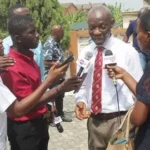
In an interview with The National Enquirer Newspaper at Adedease-Asougya in the Sunyani East Constituency, Mustapha Meshark, the Nkorsohene (Development Chief) of the Nankwtewa Traditional Area in the Sunyani Municipality of the Bono Region, stated that his intervention aimed to provide immediate assistance to a community that has been long neglected despite its economic significance.
“We are here this afternoon to offer some relief to the people by enhancing their primary access road. Although it is a feeder road, the hardship experienced here is severe,” he remarked.
Adedease-Asougya is predominantly an agricultural community, with cocoa production being the cornerstone of its local economy.
However, according to the Development Chief, the poor condition of the road connecting the community to the Atuahene stretch has significantly hindered farming operations and daily travel.
In response to the circumstances, Mustapha Meshark indicated that he organized his team to assist the community by providing gravel to fill potholes and improve sections of the road temporarily.
He clarified that the intervention was designed to alleviate transportation difficulties and allow residents, particularly farmers, students, and traders, to conduct their daily activities with greater ease.
In addition to the immediate repairs, the Nkorsohene took the opportunity to exert political pressure on authorities and other stakeholders, urging government officials, civic-minded citizens, and development-focused individuals to lend their support to the community.
According to him, the conditions in Adedease-Asougya significantly worsen during the rainy season due to inadequate drainage and incomplete infrastructure.
He disclosed that there are over three bridges along the route with culverts that were built but never properly filled, transforming the area into a nightmare for road users whenever it rains.
“These unfinished culverts have placed the community under considerable stress. When it rains, students find it difficult to reach school, farmers face challenges in transporting their produce, and traders incur losses,” he remarked.
While praising President John Dramani Mahama and the Minister for Roads and Highways for recently initiating the government’s “Big Push” infrastructure initiative, Mustapha Meshark emphasized that Adedease-Asougya needs urgent and focused attention.
He urged the Roads Ministry to give priority to the area, contending that even if asphalt surfacing is not immediately possible, a well-constructed and passable road would greatly enhance the quality of life for residents.
For many locals, the situation in Adedease-Asougya has become a symbol of unfulfilled political promises and years of halted development.
As demands for accountability increase, residents remain hopeful that the current intervention by the Development Chief will spur government action and finally put an end to what they describe as decades of neglect.