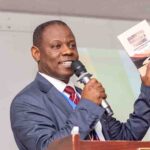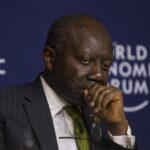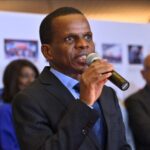



Dr. Nii Moi Thompson, Chairman of the National Development Planning Commission (NDPC), has raised concerns over the collapse of local governance and the urgent need for strong, accountable institutions to ensure sustainable development in Ghana as part of the ongoing consultation on the development of the consolidated national development plan for the country.
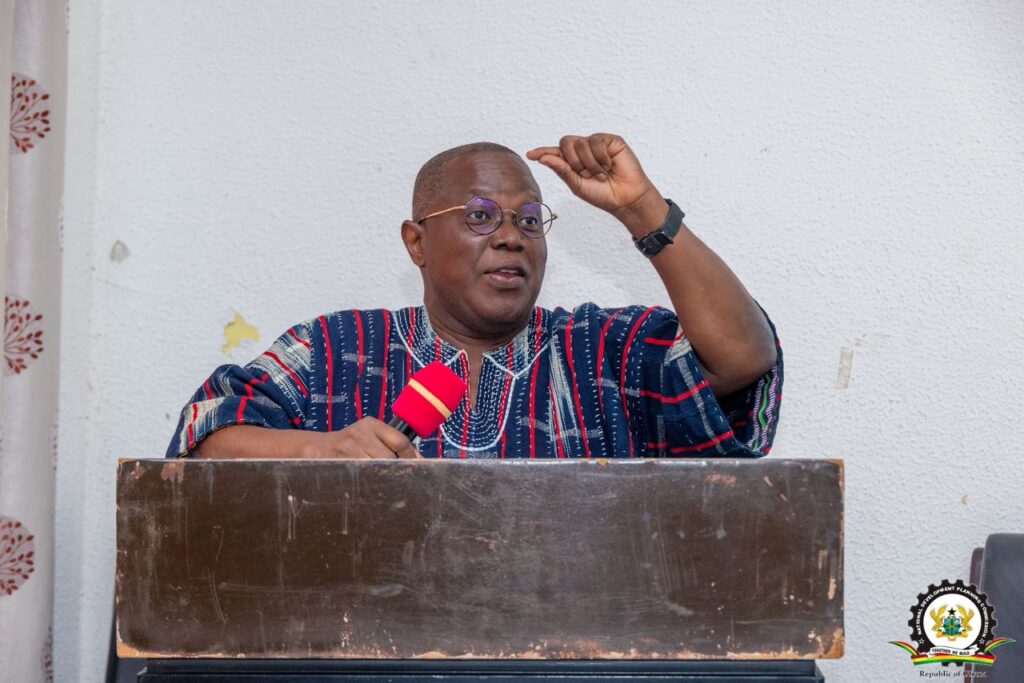
Dr. Nii Moi Thompson, Chairman of the National Development Planning Commission (NDPC)
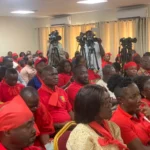
Addressing stakeholders at the Central Regional consultative engagement with Regional Coordinating Councils and Metropolitan, Municipal and District Assemblies, on Tuesday, 24th February 2026, he reflected on decades of inconsistent planning and weak enforcement of regulations, which have left communities underserved. “As you travel across the country, you notice that we have so many institutions, yet so little governance in terms of service delivery,” Dr. Thompson said, citing the challenges in Accra and other urban centres as examples of systemic dysfunction.
The NDPC Chairman criticised the recurring practice of periodic decongestion and demolition exercises without follow-up or institutional support, describing them as temporary measures that fail to resolve structural problems. “You can decongest all you want, but without institutions to sustain the results, everything reverts to disorder,” he emphasised. He urged spatial planning officers and local authorities to take responsibility for enforcing orderly development, warning that drawing salaries without measurable impact amounts to a failure of duty. According to Dr. Thompson, lasting progress requires disciplined implementation, effective spatial planning, and institutions capable of enforcing laws consistently.
Highlighting the rationale for a coordinated approach, Dr. Thompson disclosed that President John Dramani Mahama had directed the NDPC to develop a consolidated national development plan, following the Commission’s inauguration in May last year. The Chairman explained that Ghana’s inability to sustain long-term development frameworks over the past two decades necessitated decisive action. “For nearly 20 years, as a nation, we have not had consistency,” he stated. Previous plans, including the 40-Year National Development Plan, Ghana Beyond Aid, Ghana@100, and Vision 2057, were either not implemented or lacked bipartisan support, leaving local development initiatives incomplete and communities underserved.
Dr. Thompson further identified political interference, weak spatial planning, and insufficiently localised frameworks as key obstacles to effective governance. He cited instances where local officials were hesitant to enforce regulations for fear of dismissal, stressing that “spatial planning is critical to economic growth. Poor planning leads to wasted resources and uneven development.” The Chairman outlined that the consolidated national development plan will be anchored on values-driven development, stronger local economic growth, integrated infrastructure planning, and social development that addresses citizen needs, aiming to ensure that local governance is functional, accountable, and responsive.
The NDPC Director-General, Dr. Audrey Smock Amoah, urged Metropolitan, Municipal and District Assemblies to prioritise people-centred development within the national Medium-Term Development Policy Framework, themed around creating jobs, ensuring accountability, and promoting shared prosperity from 2026 to 2029. She explained that each district’s plans are assessed against national guidelines and certified only after meeting compliance requirements, emphasising that implementation, monitoring, and reporting are as critical as plan preparation.
Dr. Amoah reminded officials that sustainable development will only be achieved when MMDCEs ensure proper funding, execution, and evaluation of projects in line with approved plans, strengthening local governance and institutional accountability across the country.
The Regional Coordinating Director, Mr. Sampson Amoako Kwarteng, welcomed the engagement, describing it as timely and critical to Ghana’s long-term development agenda. He said the region was “deeply grateful to the Chairman and the leadership of the Commission for entrusting us with this significant national assignment,” noting that the exercise aligns with efforts to consolidate the country’s development aspirations into a unified framework and demonstrates renewed commitment to policy continuity, coherence and alignment across sectors and levels of government.
source:www.senaradioonline.com